Table of Contents
Ceramic dental crowns have recently emerged as a preferred choice for restoring damaged or missing teeth.
Thanks to advanced dental technology, patients can enjoy natural-looking, biocompatible, strong, and long-lasting all-ceramic crowns to restore their smile.
What Are Ceramic Crowns?
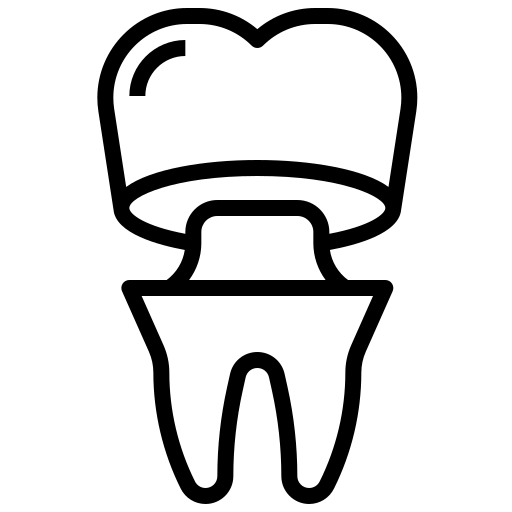
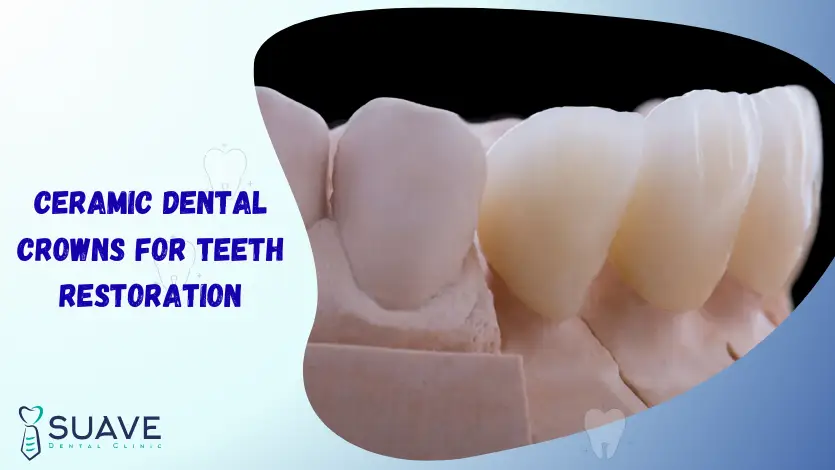
A ceramic dental crown, also known as a ceramic tooth crown, is a full-coverage restoration fabricated entirely from ceramic materials, such as porcelain, lithium-disilicate, or all-ceramic.
Most of them are used to cover a prepared tooth to restore its function, aesthetics, and structure. In contrast, others are designed to cover implant abutments like implant-supported bridges, “abutment-supported porcelain or ceramic crowns”.
Dental crowns made of all-ceramic materials are highly recommended and used in dental clinics more frequently than traditional porcelain-fused-to-metal (PFM) crowns, which were previously limited to covering or restoring missing back teeth.
PFM isn’t the material of choice for front teeth restoration as the greyish black shades of its metal core are visible within the porcelain layer.
That’s why all cosmetic specialists head towards dental crowns and bridges made of ceramic material.
Uses and benefits of ceramic dental crowns
Porcelain and ceramic crowns are the best crowns for teeth from a material and manufacturing perspective, as they are:
- Aesthetic restoration
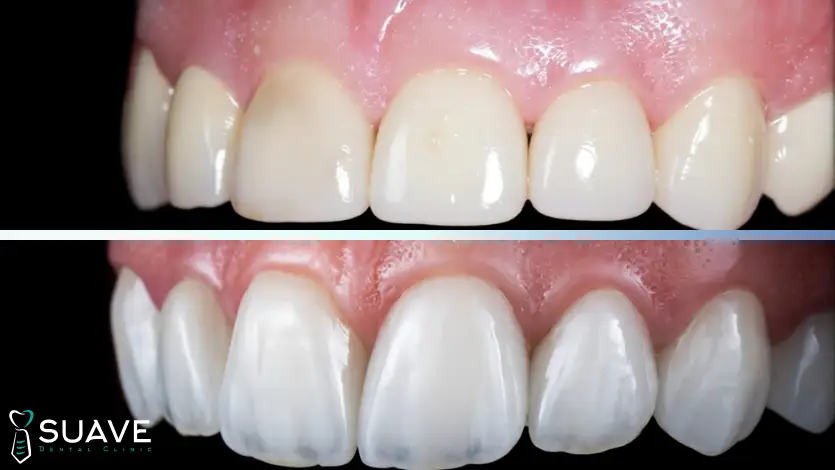
Ceramic crowns are translucent and have enamel color-matching properties, making them highly suitable as a ceramic anterior crown.
Research proves that modern ceramics like lithium-disilicate “Emax crown “, glass-ceramic, and zirconia-based ceramics are highly aesthetic. - Biocompatible
These crowns are free of metal ( all-ceramic crowns), so metal allergies and dark gingival margins side effects are avoided. - Permanent and Durable
Research indicates that all-ceramic crowns can last for a long time, with survival rates ranging from 92% to 99.4% after 5–8 years, especially for Emax and zirconia crowns.
Also, with good oral hygiene, many crowns can last for more than 15 years. - Modern technology integration
With CAD/CAM systems, dentists can design and create ceramic restorations using a fully digital workflow.
In modern clinics and labs, they depend mainly on digital scanning and milling for producing highly accurate crowns, which leads to fewer adjustments during the insertion phase and a faster turnaround time.
A dentist just enters the scanned impression of the tooth and the required shade of the block and generates a highly accurate, strong crown.
You might also hear the term “CEREC crowns”, they are crowns referring to those made using the CEREC (Chairside Economical Restoration of Esthetic Ceramics) system, a well-known in-office CAD/CAM system.
These benefits make ceramic dental crowns an attractive option for many patients, particularly those seeking both strength and aesthetics.
Potential drawbacks of ceramic dental crowns
Before you decide on having a crown, you should know the possible side effects of this treatment:
- Fitting and marginal adaptation
If a crown doesn’t seal perfectly, it may lead to some dental problems, such as decay around the edges or sensitivity over time. That’s why choosing an experienced dentist and a high-quality dental lab is a must. - Wear of the opposing teeth
Especially, incase of very hard materials like zirconia, it may cause wear on the opposing tooth if the bite is not adjusted properly. - No re-adjustments can be done
Once it’s fabricated, it can’t be re-adjusted or changed in its shade. - Cost
They are expensive due to CAD/CAM techniques used in their fabrication. - Requires special equipment to be fabricated, like a CAD/CAM system is used in their manufacture.
- Require a special bonding system, as ceramic crowns as zirconia, require special dental material as etchant, primer, and special resin bonding agent for permanent bonding to the tooth structure and long-lasting result.
- Minimal risk of fracture and chipping, which is being resolved by using high-endurance, high-resistant to fracture ceramic blocks like Ivoclar Emax and Zirconia blocks
All-Ceramic Crown Materials
Different types of ceramics offer different levels of strength and aesthetics, so the choice depends on each patient’s needs. The types of ceramics used can be grouped into three main categories:
- Glass-Based Ceramics (such as leucite-reinforced ceramics and lithium-disilicate) Emax crowns
These are ceramics mixed with tiny crystals to make them strong and natural-looking, with high optical properties, making Emax crowns and veneers highly translucent restorations that mimic natural tooth enamel
Emax Ceramics combines strength, excellent translucency, and natural appearance, making them ideal for front teeth. - Glass-Infiltrated Ceramics (In-Ceram Group)
These ceramics combine strong particles with glass, giving a balance of strength and aesthetics. However, this material is obsolete, leaving the stage now to Emax and zirconia crowns for maximum strength and a long-lasting, natural smile. - Polycrystalline ceramics (such as zirconia and alumina)
These are much stronger but slightly less translucent than glass-ceramics. Zirconia crowns, either fully solid (monolithic) or layered, are commonly used for back teeth because they can withstand heavy forces.- Monolithic ceramic crowns
Made from a single solid block of ceramic (such as monolithic zirconia), these crowns reduce the risk of chipping because they do not have a separate porcelain layer. They are strong and durable.
Years ago, monolithic restorations had good mechanical properties but with an opaque white color, which does not provide the desired aesthetic requirements, so they were restricted to the posterior teeth. - High translucent zirconia
Zirconia crowns have evolved to fix their optical properties. Modern Zirconia blocks are highly translucent to fabricate zirconia crowns and zirconia veneers for the front teeth to provide a whiter, natural, pretty smile like celebrities. - Layered ceramic crowns
These crowns combine a strong inner core (like zirconia) with an aesthetic porcelain outer layer. They look very natural, but the outer porcelain layer is more likely to chip compared to the monolithic option.
It consisted of an inner core of monolithic zirconia layered with a hand-made artistic layer of porcelain to mimic the gradient and translucent shades of enamel. This restoration porcelain fused to zirconia (PFZ) has replaced PFM for years.
- Monolithic ceramic crowns
All-ceramic crown tooth preparation
Before starting the tooth preparation, the dentist examines your oral cavity and prepares the mouth to receive the new restoration. This includes removing any caries, eliminating any remaining roots, and ensuring the gums are healthy and free of plaque.
The goal of tooth reduction or preparation is to create sufficient space for the ceramic material while maintaining the tooth’s strength to support the crown.
These steps should be followed:
- Creating enough space for the crown according to the required type of ceramic.
At Suave Clinic, Teeth preparation is a minimally invasive dental procedure; we don’t cut the tooth structure down to be shark teeth or thin the teeth down. We care for our patients’ dental health and the lifespan of the restorations, as the thinner the abutment teeth are, the weaker the tooth caps. - Designing a smooth, supportive margin, or what we call “ Finish Line”, which helps the crown sit securely in its place, because a fit crown is important for preventing problems like gum inflammation, decay under the crown, or sensitivity.
- Checking the proper bite, enough clearance between the prepared tooth and the opposing one, so the ceramic crown can be placed over the prepared tooth without being so high or chipped upon eating.
- A digital impression of the jaw is taken to design the tooth on CAD / CAM software technology.
- Temporary crowns should be made and used between visits to protect your preparation.
- Bonding to the prepped tooth or screwing to the dental implant abutment: Either of these techniques ensures a seal to reduce the risk of the crown loosening over time.
Zirconia crown vs ceramic crown
You may get confused about a Zirconia crown or a Ceramic Crown
Technically, zirconia is a type of ceramic, but in dentistry, the term “ceramic crown” often refers to glass-ceramic options like Emax crowns or layered porcelain ceramic crowns.
Let’s get closer to the differences between them in each of the following points:
1. Strength and Durability
- Zirconia crowns are known for their strength, making them ideal for posterior teeth or patients who grind their teeth during sleep.
- Glass-ceramic crowns are less strong in bearing the biting forces, so they are best used for the front teeth.
2. Aesthetics
- Zirconia used to be less aesthetic, but newer high-translucency zirconia materials now look much more natural.
- Glass-ceramic crowns are translucent and have a natural look.
3. Wear on Opposing Teeth
- Zirconia is extremely hard; it may cause more wear to the tooth opposing it.
4. Bonding and Cementation
- Glass-ceramic and zirconia crowns usually require a special adhesive bonding technique.
5. Chipping or Fracture Risk
Layered ceramic crowns, which are porcelain layers built over a zirconia core ‘ framework’, look very natural but may chip over time. Monolithic zirconia, which is made from a single block, is much less likely to chip.
To sum up, we can say that:
- Glass-ceramic = most natural look, so better used for front teeth where appearance is most important.
- Modern zirconia = highly aesthetic with added strength, so it’s recommended for use in posterior teeth to withstand heavy biting forces.
Cost of ceramic dental crowns in Turkey
Treatment costs vary between countries depending on the crown material (ceramic, zirconia, E-max), the brand used, the complexity of the case, and the clinic’s location and reputation.
So, this always triggers patients to travel for dental treatment, especially to Turkey.
Dental tourism in Turkey is highly recommended due to the lower cost of dental treatments, besides its high-quality and fast care.
- Standard all-ceramic crowns typically range from £180–£300 per tooth in Turkey, while prices can reach about £1,000 for ceramic crowns in some UK clinics.
- Zirconia crowns usually cost £180–£300 in Turkey, while UK private clinics often cost £700–£1,500 for the same material.
- E-max crowns are commonly priced at $400–$600 in Turkey, while UK list prices may go up to about £1,200.
Overall, patients can expect 60%–70% lower costs in Turkey, even when travel expenses are included. In Suave Dental Clinic, we provide all-inclusive packages covering full mouth crowns as Turkey Teeth, hotel accommodation, and airport transfers, making the treatment even more cost-effective.
How long do ceramic crowns last?
Clinical research shows that ceramic crowns have high survival rates, especially when proper preparation, bonding, or cementation, and good oral hygiene care are maintained.

See all the instructions you should follow about dental crowns and bridges aftercare.
In general, high-quality ceramic crowns have a lifespan of 10–15 years, and many can last more than 15 years with a commitment to good oral hygiene, regular dental visits, and avoidance of harmful habits such as teeth grinding.
Get A Free Dental Consultation
Get A Personalized Treatment Plan and Quotation
Ceramic Crowns FAQs
Do ceramic crowns stain or chip?
Staining: Ceramic crowns are resistant to stains from food and drink unless the outer glaze wears down, so stains can be collected due to roughness.
Chipping: It depends on whether it is one layer or layered; It’s more common in layered porcelain, less common in monolithic crowns.
Are porcelain ceramic crowns good?
Yes, full porcelain offers a natural-looking, durable, biocompatible, and cost-effective crown for restoring damaged or lost teeth.

References
Medically Reviewe