Table of Contents
Have you ever experienced tooth sensitivity when drinking hot or cold drinks? In most cases, the cause is not necessarily related to the tooth itself. It could be an early sign of gum recession. A common dental problem that affects more than ⅔ of the population. When the gum line recedes, exposing more tooth structure.
Receding gums cause aesthetic problems, teeth sensitivity, and pain. Although the problem seems simple at first, ignoring it may lead to a permanent loss of the tooth.
Let’s take a closer look at what receding gums are, the main causes of them, the available treatment options, and the most important question: how do you prevent receding gums?
Healthy vs. receding gums
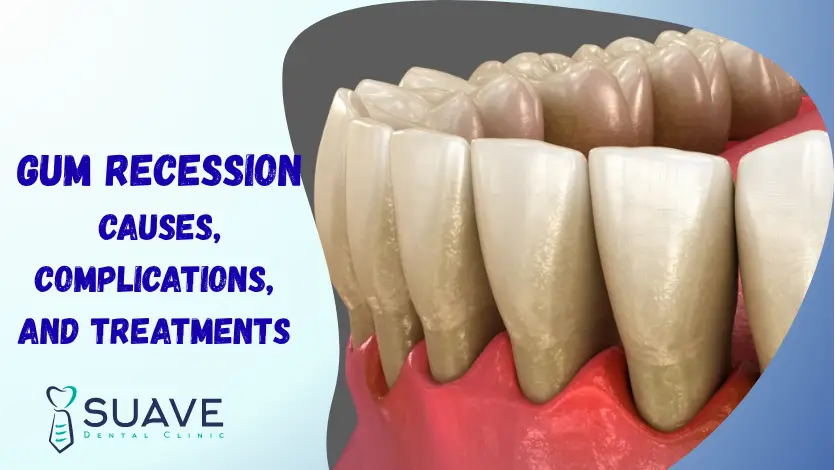
Healthy gums have a natural pink color with a stippling texture like orange peel. They have a proper scalloping shape, forming a protective collar around each tooth, covering the tooth root and leaving the white crown exposed in the oral cavity.
On the other hand, receding gums means gums shrink and move apically towards the jawbone, exposing the tooth root beneath them. Gum recession can affect one tooth or multiple teeth. Here are the most common symptoms of receding gums:
- Teeth are sensitive to hot, cold, or air because of exposed roots.
- Teeth appear longer and darker (due to the yellowish colour of the root)
- Root decay occurs as the root is covered by cementum, which is not as strong as enamel and decays easily.
- Pain and discomfort during brushing, flossing, or dental cleaning.
- Unnatural smile: with gingiva that is declining and receding towards the lips, leaving the teeth’s appearance unnatural; elongated with black triangles in between teeth, without the pink aesthetic appearance.
What causes receding gums?
The question that often comes to mind: Why are my gums receding? There are several reasons for receding gums. Including the following predisposing factors:
- Aging: 88% of people over 65 have gum recession, often due to lower collagen and elastin in the gingival tissue.
- Calculus (Tarter) and plaque accumulation that progressively infect the periodontal tissue of the gingiva, ligaments, and alveolar bone that supports teeth, followed by the tissues disintegraton overtime.
- Gum diseases: it’s considered the main cause of receding gums, due to bacterial infections that cause gingival inflammation and bleeding: gingivitis, which can progress to serious periodontitis, and bone destruction if left untreated.
- Aggressive brushing: Although brushing is important for oral health, technique matters. Vigorously brushing has adverse effects and can cause gum recession.
- Hormonal changes: during fluctuation periods in different conditions. During pregnancy, puberty, or menopause, gums are more likely to be inflamed and infected, and consequently to recede.
- Genetic cause: about 30% of people experience receding gums, even with good oral care. They have a family history of thin or weak gums and also gum disease.
- Grinding and clenching: teeth grinding during sleep causes much force on teeth and gingiva, causing gum recession.
- Repetitive Trauma or gum injury due to tongue or lip piercing, which could hurt and irritate the gum.
- ill-fitted restorations, like dentures, mouthguards, or overfilling, which cause continuous friction and pressure, resulting in gum injury and recession.
- Maligned tooth position: If teeth are incorrectly positioned, this will cause uneven force distribution, resulting in harmful effects on bone and gums.
- Smoking or tobacco-chewing products: Individuals who engage with habits like dipping pouches will experience more plaque and tartar accumulation. This can, in turn, cause gum inflammation and recession.
Complications when receding gums worsen
Untreated receding gums are a serious issue impacting oral health. It can lead to serious issues, including the following:
- Losing gingival support around the teeth’s crowns, which also followed
- Bone loss: prolonged gum recession leads to a gradual bone loss and affects tooth stability
- Tooth mobility: because of the gradual destruction of all tooth-supporting tissues.
- Tooth loss forever: due to the continued destruction of all supportive tissues of the tooth.
- Difficult teeth restoration: Replacement of the missing teeth with dental implant restoration is not applicable without dental bone graft and membrane surgeries.
How to fix receding gums?
Gum recession has various stages: mild, moderate, and severe. These stages are different in the treatment approach.
- Mild receding gums can be fixed without surgery:
- Dentists usually start with oral hygiene education, including the proper technique, tools, and recommended products (desensitising toothpaste- antimicrobial mouthwash) to relieve the symptoms and control the case.
- Making professional dental cleaning to the gums and teeth surfaces, and also under the gum line (root surface), is called scaling and root planing. To eliminate plaque, tartar, or bacterial accumulation, leaving the surface smooth.
- Apply fluoride varnish or any desensitising agents to reduce tooth sensitivity and discomfort.
- Occasionally, local antibiotics are injected directly under the gum line (inside the pockets) to decrease the pockets’ depth and enhance reattachment in moderate cases.
- Orthodontic treatment: in case the patient has malaligned teeth. Braces can return teeth to their normal position, and the gum line improves with time to the right position.
- Dental bonding: the recession area is covered with a tooth-coloured composite resin restoration to improve the aesthetic and decrease the sensitivity.
- While moderate to severe cases need surgical treatments, where surgical flaps are done by periodontists who specialize in that filed Gum graft surgeries, such as soft tissue graft and open flap scaling and root planing that expose the roots for removing all bacteria from dental pockets in affected areas, and then securing the gingival tissue over the root surface.
- LANAP Laser Surgery: A modern, less invasive option that uses lasers to remove diseased tissue and encourage new tissue growth.
- Bone Regeneration: in case of severe bone and tissue destruction. We need to naturally generate the defective tissues by using regenerative materials such as bone graft and membrane. By adding a certain stimulus protein to the remaining bone, it can regenerate the supporting periodontal tissue of the alveolar bone and the gingival attachment over a period of time.
Daily oral care to prevent receding gums
While prevention is better than treatment, daily oral care is crucial to prevent receding gums. It’s better to ask your dentist about the proper technique to brush your teeth effectively.
- Brushing at least twice daily
The best toothbrush for receding gums has soft-bristles. If you are using an electric one, choose an electric soft-bristled brush with sensors to control the brushing pressure, and specialized in gum care or sensitive teeth. - Floss daily, especially after meals.
- Use desensitising toothpaste to relieve tooth sensitivity.
- Rinse with antiseptic mouthwash twice daily.
The best mouthwash for receding gums aims to reduce plaque accumulation to prevent any further gum inflammation by including antiseptic agents like chlorhexidine as a main ingredient. - Eat healthy food that is rich in vitamin C, which is known for its good effect on gum health.
- Avoid bad habits such as smoking or chewing tobacco.
- Regular dental visits every 3-6 months according to your dentist’s recommendations.
- Choose specialists over the cheapest, to avoid bad overfillings and ill-fitting restorations.
Remember that your control is limited, as factors like genetics are out of your hands.
Get A Free Dental Consultation
Get A Personalized Treatment Plan and Quotation
Receding Gums FAQs
Are there home remedies for receding gums?
Despite receding gums not being reversible, there are home remedies that can prevent the condition from becoming worse. Try the following methods: oil pulling, salt mouthwash, drinking green tea, and, of course, a proper oral hygiene routine.
What are the best toothpastes for receding gums?
The best toothpaste for receding gums is desensitising toothpaste, the one which contains desensitising agents like stannous fluoride and potassium nitrate to calm the nerves inside the tooth.
Can I put a crown on the tooth with receding gum?
Only if the gum recession is mild and the tooth and supporting bone are healthy and stable, a small pink porcelain gingival-like extension to the tooth-colored crown can be made to cover the recession; otherwise, it’s better to treat the receding gums first to increase the success rate of the crown.
Can receding gums be reversed?
Unfortunately, no. Once receding gums happen, they can’t grow back. You can only treat the current situation and prevent it from becoming worse

References
Medically Reviewe