Table of Contents
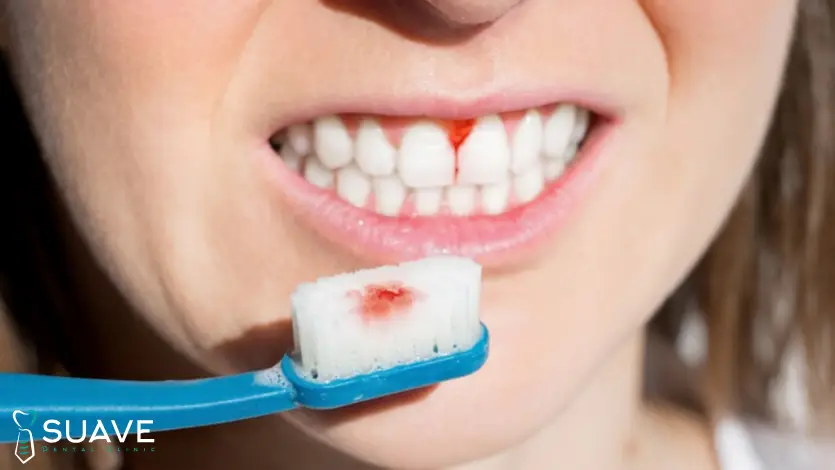
Have you noticed puffy gums around your teeth? or experienced gum bleeding when you brush your teeth?
Some may think that when they stop brushing their teeth, they have solved the problem. Instead, they made their gingival state worse. Today, we will discover what gum pockets are, what’s pocketing inside gums, and how to fix them.
What are periodontal pockets?
It’s a form of gingivitis where the inflamed, swollen gingiva around the teeth forms a micro tunnel, gap, or space (in millimeters) between the gingiva and the tooth’s root that permits food debris and bacteria to enter and accumulate in the gums, leading to further periodontal infections.

Do you ever wonder: Why do my teeth bleed when I brush my teeth?! Here’s our answer!
How are gum pockets formed?
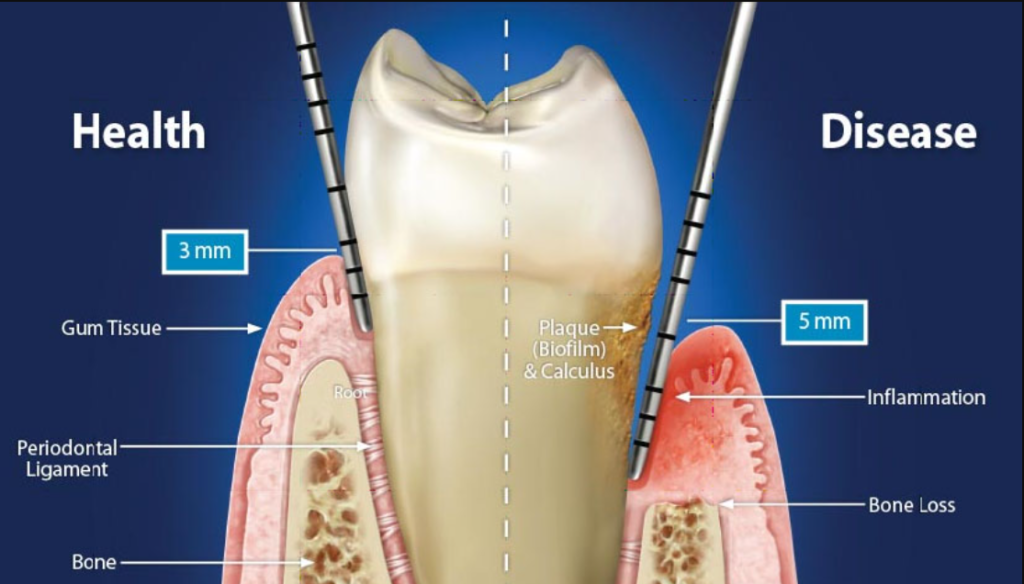
Healthy teeth are covered with firm and pink gingiva that sticks well to the teeth’s surface. This tight seal leaves no space for bacteria to hide or penetrate beneath the gums.
The shift begins with neglected oral hygiene. A Plaque (sticky layer rich in bacteria and food debris) accumulates on the tooth surface at the gum line. It starts irritating the gum, leading to gum inflammation.
As the condition progresses without teeth brushing and flossing for 24 hours, plaque hardens into calculus (tartar), causing further irritation of the gum. That eventually penetrates the gingiva around the tooth’s neck, reaching the deeper gingival tissue (periodontal tissue), forming what we call “periodontal pockets.” A space or detachment formed between gum and tooth surfaces where bacteria and plaque become trapped (pocketing) and can’t be removed completely by a home care routine.
What does a gum pocket feel like?
It’s usually painless at its early stage. But with time, symptoms become so obvious that you should pay attention to them. You will notice some or all of the following symptoms:
- Red, puffy, tender, and easily bleeding gums because of gingivitis.
- Spitting blood just after waking up.
- Bleeding gums on brushing, resulting in pink blood spots on the toothbrush
- Dark reddish purple gingiva instead of a pale pink color
- Dull pain: a constant dull aching pain in affected teeth in simple cases, which, with time, these gum pockets become very painful, especially when brushing, chewing, or flossing
- Bad breath and taste (halitosis): due to continuous bacteria hidden in the pockets without any cleaning, leading to gum infection
- Tooth sensitivity when eating sweets.
- Feeling that teeth are wobbly or shaking in their sockets.
- In chronic inflammation, the tooth appeared too long due to gum recession, and part of the root is exposed in the oral cavity
- Tooth sensitivity due to gum recession and exposed root surface.
What is a gum pocket measurement?
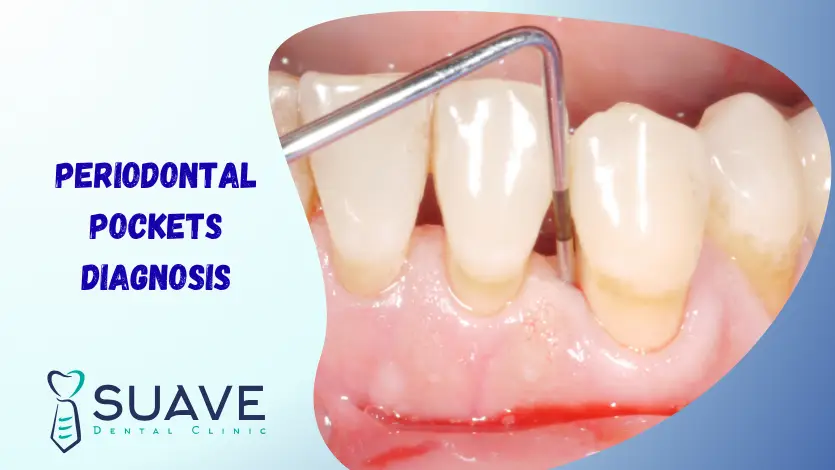
A periodontist, a gum specialist, diagnoses gum pockets by measuring the depth of the space between teeth and gum in millimeters, using a periodontal probe with grades. Giving us the following results:
- 0-3 mm indicates healthy gums, with a shallow space that is easily cleaned at home.
- 4-5 mm means there is gum disease; the gingiva becomes swollen and red.
- More than 5 mm, A deep gum pocket indicates severe periodontitis, with severe soft tissue and bone destruction.
We involve periodontal measurements in our routine diagnosis at Suave Clinic. It’s better to begin each dental procedure with a professional dental cleaning to eliminate any tartar or food debris.
10+ causes of pockets in gums
Bacteria are the main cause of pockets in the gums. So, any condition that encourages bacterial buildup will, over time, lead to gum pocket formation. Following this principle, here are the common situations where the risk of inflammation and pocket formation increases:
- Neglected oral hygiene, which allows more bacteria, plaque, and calculus buildup. With time, it causes gum inflammation, and the gums lose their tight seal to the tooth surface.
- Untreated gum inflammation: it turns into a more serious condition, and gums may pull away from teeth, forming pockets where more bacteria can thrive.
- Using hard objects to cleanse teeth gaps: like using tooth picks or metal pins to clean between teeth. Instead of cleaning, they injure the gingiva, enlarge the gap between the gingiva and tooth, and push the bacteria and debris deeper. Not just causing gum irritation, they actually push the gum apically, creating deep gum pockets.
- Hormonal changes during pregnancy, puberty, or menopause: As hormonal fluctuation increases, gum sensitivity and inflammation increase.
- Rich sugar food intake: eating sweets, candy, bad carbs, processed food with lower water intakes, which fuels bacteria growth and increases gum inflammation.
- Stress and health conditions: prolonged stress, uncontrolled diabetes, and autoimmune disease that weakened the body’s natural defense, affecting the body’s ability to fight off gum infection.
- Medications that cause dry mouth and affect the saliva flow. Over time, a rapid bacterial accumulation happens.
- Genetics, as some people are more prone to gum and periodontal disease, even with a good oral hygiene routine.
- Unhealthy lifestyles, like smoking, vaping, or chewing tobacco, affect gum health and consequently cause gum pockets, followed by gum recession
- Overhanging fillings or ill-fitting crowns (with overhang edges) could trap food and bacteria that can’t be reached with daily care. With continuous irritation, gum pockets formed.
- Aggressive teeth preparations: some dentists aggressively prepare teeth for dental crowns and bridges; this aggressive, unaware teeth reduction can cause gum injury, inflammation, and the formation of gum pockets.
At Suave Dental Clinic, you can easily avoid ill-fitting, bad restorations with our expert dentists. We are strict in non-violating the periodontal biological width with conservative teeth preparations and well-fit dental restorations and caps over the teeth. We ensure our dental fillings, dental crowns, and bridge restorations are perfectly sealed and contoured.
How do you get rid of gum pockets?
Treatments of gum pockets differ according to the stage of periodontal destruction, starting with patient education about maintaining oral hygiene routine and the right way of tooth brushing and flossing, which in some simple cases are enough to decrease gingival inflammation and heal gum pockets.
Non-surgical gum pockets treatments
for simple cases with gum inflammation
- Local antibiotics for gum pockets are in the form of antiseptic mouthwash, or localized antibiotic gel and chips applied directly inside the pockets by the periodontist. They are usually used in conjunction with other dental treatments.
- Scaling and root planing: a non-surgical treatment done using ultrasonic scalers to remove calculus from the tooth surface. Some periodontal tips and curettes allow safe root planning to remove deep debris and bacteria, leaving the crown and root surface clean and smooth to allow reattachment of the gingiva.
Surgical deep gum pockets treatments
- Pocket reduction surgery: “ flap surgery,” a treatment for deep gum pockets. A periodontist makes an open cut in the gingiva, making a flap. Moving the gum away from the teeth surface to remove all bacteria, plaque, and calculus that accumulated deeply in the periodontal tissue and bone. Then the gum is repositioned with sutures.
- Laser surgery, LANA, a “laser-associated new attachment procedure”, is another noninvasive technique for pocket reduction and cosmetic gum surgery, using a handheld laser that affects the diseased gum with no effect on the healthy one.
- Gum or bone graft is used in periodontitis with severe bone destruction when tissues need to be restored by a gum graft surgery or bone graft.
- GTR “Guided tissue regeneration”: a supplementary material used in the case of a bone graft. Adding an artificial membrane between the bone graft and the gingiva enhances bone formation and growth.

See more about bone graft and membrane surgical requirements.
Complications of gum pockets if neglected
Untreated gum pockets can lead to more serious issues. Including the following complications:
- Chronic periodontitis: neglecting gingivitis for a long time can cause further tissue and bone destruction.
- Pulp infection: as bacteria can deeply spread and reach the pulp through the tooth’s root (from the root canals to the pulp), leading to pulp infection even if the tooth is healthy and free from tooth cavities.
- Permanent Bone loss occurs as infection and bacteria reach the bone and cause bone resorption.
- Tooth loss: with continuous plaque and bacterial buildup, deeper. Leading to the destruction of all supportive tissue that holds teeth in their sockets.
- Chronic gingivitis that is left untreated can cause gum recession, where the tooth appears too long due to gum recession, and part of the root is exposed in the oral cavity.
- Complicates any dental restoration procedure; dental implants, veneers, crowns, and bridge restorations can’t be performed unless the gingiva is healthy, with a good tooth-tissue attachment.

All you want to know about: Treatments for receding gums
Unfortunately, the complications extend beyond just affecting oral health and impact the patient’s Life. Bacteria can enter the bloodstream, reaching different body parts and causing the following complications:
- Cardiovascular disease
- Diabetes complications
- Respiratory infection
- Strocks
- Premature birth
Because prevention is better than a cure, a proper oral care routine of brushing and flossing is your first line of defense. However, a professional dental checkup is important to detect any minimal changes you may miss at home. Don’t wait for the symptoms to appear. Take the step and book an appointment at Suave dental clinic and maintain your gums healthy and strong.
Get A Free Dental Consultation
Get A Personalized Treatment Plan and Quotation
Gum Pockets Treatment FAQs
Are gum pockets the same as gum recession?
No, gum pockets are an invisible detachment of gum from the tooth surface, while gum recession is a visible shrinkage of the gingiva exposing the root surface.
A Gum pocket is considered one of the early symptoms of gingival inflammation and periodontitis; on the other hand, chronic periodontitis, inflammation over a long period of time, causes periodontal tissue and bone loss, followed by gum recession.
Can gum pockets reverse?
Yes, gum pockets can be reversed totally in mild to moderate cases. In severe cases combined with bone resorption, the damage to the bone is permanent, meaning pockets can’t be fully reversed.
How to use a gum pocket brush?
To use the interdental toothbrush, “the best gum pocket brush,” start by selecting the correct size, gently insert the brush between teeth, and move it 2-3 times back and forth to remove any debris or plaque. Wash the brush and keep it clean.
What is the best toothpaste for gum pockets?
A toothpaste with active ingredients like stannous fluoride (to reduce plaque and gum) and antibacterial ingredients (to eliminate bacteria). Brands like Paradontax or Sensodyne Complete Protection toothpaste are the best.
How to clean deep gum pockets at home?
Although professional cleaning at a dental clinic is the best here, there is a way to clean deep pockets at home, provided they are less than 5 mm deep. By using water flossing with a special pocket tip, you can go deeper with slight pressure.

References
Medically Reviewe