Table of Contents
More than 70% of adults in the USA suffer from dental anxiety, while 54% of 16-to-24-year-olds report moderate anxiety in the UK. Compared to Canada, where estimates suggest that up to 22% of patients face significant fear regarding dental care.
In this article, here’s how we cope with patients with dental anxiety, starting from knowing the main causes or triggers of fears and the different strategies used to overcome them.
What is Dental Anxiety?
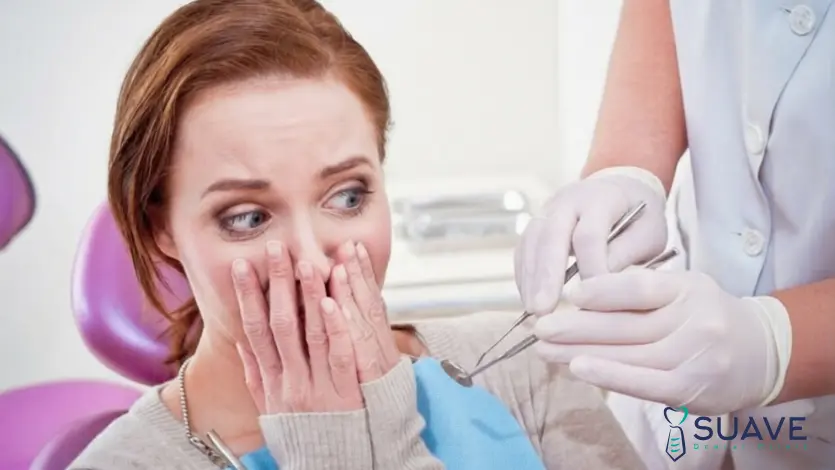
Dental anxiety is feeling discomfort, unease, and apprehension about any dental work. A patient may feel worried and anxious before the dental appointment, with this irritability, the patient takes the risk and goes to the dental clinic.
Dental anxiety can be a severe and overwhelming condition called dentophobia, or dental phobia (odontophobia), which is when patients feel intense fear or panic just from thinking about visiting the dentist.
The symptoms of anxiety and dental phobia
Dental anxiety symptoms are considered to be mild and easy to handle compared to dental phobia symptoms:
Anxiety appears as nervousness, irritation, and hesitation, but ends up with going to your dentist’s, though you dread the whole process.
Odontophobia is an exaggerated fear and panic that forces a person away from fixing their dental issue. A person may experience severe dental pain but never go to a dentist. Here is a comparison between Anxiety and phobia:
| Comparison | Dental Anxiety | Dental phobia |
| symptoms | Worry Nervousness Hesitation Mild fear Irritability Mild agitation Overthinking Fear of the unknown Butterflies in the stomach | Exaggerated anxiety, TerrorPanic attack, tachycardia (increased heart rate), fainting (syncope), trembling, Sweating, Dizziness, Shortness of breath, stomach upset, Sleeping difficulties and nightmares, Intense frightening, Paralyzing fear. |
| Behavior | Attended a dental appointment with some worries in mind | Avoiding or postponing dental appointments till the pain becomes unbearable |
| Duration | The patient could be fully relieved if they speak up and the dentist communicates well with them. | A patient can stay like that for years, need sedation dentistry, and professional management. |
| Complication | Can postpone simple dental work for a couple of days or months | Can lead to severely decayed teeth, tooth loss, gum disease, pulp diseases, and systemic health issues |
Causes of dental anxiety and phobia
A lot of people of any age can have dental anxiety from multiple things, like anesthesia, drills, or the dental settings themselves. Usually, dental anxiety starts before going to the dentist because of a bad experience.
- Fear of pain: it’s the most common cause of anxiety, believing that any dental tool or treatment will be painful.
- Fear of the tools’ sound, fear of the drills, and the smell of teeth drilling.
- Fear of anaesthesia: whether from the needle injection, or anaesthesia side effects
- Having a bad experience or being influenced by others’ negative experiences: when you hear from others their bad story, and expect the worst scenario to happen to you.
- Family history: if any member of your family has anxiety, this increases your liability to be anxious.
- Psychological disturbance, such as post-traumatic stress disorder, depression, bipolar disorders, or schizophrenia
- Social dental stereotype: in media representation, dentists are always put in negative situations that exacerbate patients’ fears and anxiety of dentists.
- Lose your personal space: due to the close position of the dentist to your head and mouth, you feel uncomfortable.
- Fear of loss of control: as in dental situations, you are under the dentist’s hand, and you don’t see what is happening in your mouth.
- Fear of cost: the treatment fees can cause stress and anxiety to patients, especially when the cost is over the budget.
Fears about the dental travel experience
We talk to many patients daily, and some of them have some worries and fears about the dental tourism in Turkey as an experience of travelling
- Fear of traveling by plane: This is a common phobia that needs special management.
- First-time worries: It’s normal to feel nervous and anxious on your first visit to a dental clinic; that’s why we offer a free online consultation to get to know the clinic and your dentist, communicate with each other, and feel some relief as you explain your complaints and thoughts.
- Fear of getting lost in Turkey: we, at Suave Clinic, assign a private coordinator for each patient who accompanies them from the airport to a 4- to 5-star hotel.
- Fear of insufficient sterilization or infection: We follow standard sterilization and infection control protocol. At Suave clinic, we use a Class B sterilization Autoclave to ensure maximum safety for complex, hollow, and wrapped instruments.
- Fear of miscommunication: Our team, including the patient coordinators, knows 4-5 languages, and we also provide private translators.
You may have some doubts about Turkey teeth trends, you may fear hidden costs, unnecessary dental procedures, and over-preparation of the teeth. The media is presenting a lot of dental tourism risks, but we at Suave Clinic replies the claims with our patients’ reviews and their travel experience with us.
Dentists’ coping strategies to reduce anxiety and fear
At Suave Dental Clinic, our dentists are highly aware of dental anxiety. They have strategies to cope with it, starting with an online questionnaire for easier communication with patients. Some of the dental anxiety management strategies are:
- Dental office environment: Making sure the clinic has comfortable furniture, soft lighting, calming music, and a relaxing scent. Based on the questionnaire, dentists can manage any triggers and offer a stress-free environment.
- Effective communication: Communication plays a key role in trust building and dental anxiety relief.
- The tell-show-do technique aims to tell the patient about the treatment steps before starting with clear written consents.
- Starting with a more conservative, less painful, and faster treatment like dental cleaning with scaling and polishing, and fluoride application
- Avoid the supine dental chair position, as it may be frightening to patients, and replace it with a more vertical position.
- Topical anaesthesia is applied as a swab of numbing gel to the area where the local anesthetic injection is administered.
- Proper quantity of local anesthesia for less pain during the dental procedure.
- Laser dentistry: using a laser device for cosmetic gum surgery, like gum contouring, gingivectomy, and surgical tooth extraction, or laser drills to remove decay or prepare a tooth surface. It’s characterised by being fast and effective to the point of reducing the need for dental anaesthesia.
- Psychological methods like distraction techniques, providing patients with stress balls to squeeze. During the procedure, patients can use headphones to listen to their favorite music, pause the dental procedure every 5-7 minutes, or be guided to take deep breaths through the dental procedure.
- Sedation dentistry is provided by clinics that have anasthetic specialists for handling patients with severe dental anxiety with sedation gases like nitrous oxides, pre-procedural tranquilizer medication, or general anasthesia.
- Agree with the doctor on a specific signal that, when performed, the dentist will pause the procedure, such as raising the hand. That means you feel uncomfortable or in pain.
- Advise patients to bring someone they trust with them, who can hold the patient’s hand during the dental procedure, or encourage them to reduce stress.
Our main goal at Suave dental clinics is to provide anxiety-free dental care combined with premium quality. So, we follow the most recent guidelines to overcome dental anxiety.
When to see a professional for anxiety treatment?
You should seek professional help when anxiety is difficult to manage, combined with other physical symptoms, and negatively affects your health, daily life, work, and relationships.
Dental phobia creates a dangerous avoidance cycle, as the patient postpones treatment for years, allowing minor issues to become painful emergencies. At this stage, professional intervention is essential to break the cycle and restore both oral health and peace of mind.
Get A Free Dental Consultation
Get A Personalized Treatment Plan and Quotation

References
Medically Reviewe