Table of Contents
“White spots” might seem like a minor detail on your teeth, but they can significantly affect the appearance of your smile. These spots may develop due to mineral deficiencies, braces teeth, or childhood-related factors, yet their effect is still present every time you smile.
The good news is that white spots aren’t an untreatable problem. With advanced modern cosmetic dentistry techniques, at Suave Clinic, it’s now possible to restore even color, and your teeth shine safely and effectively, giving you natural-looking results.
What are the white spot lesions on teeth?
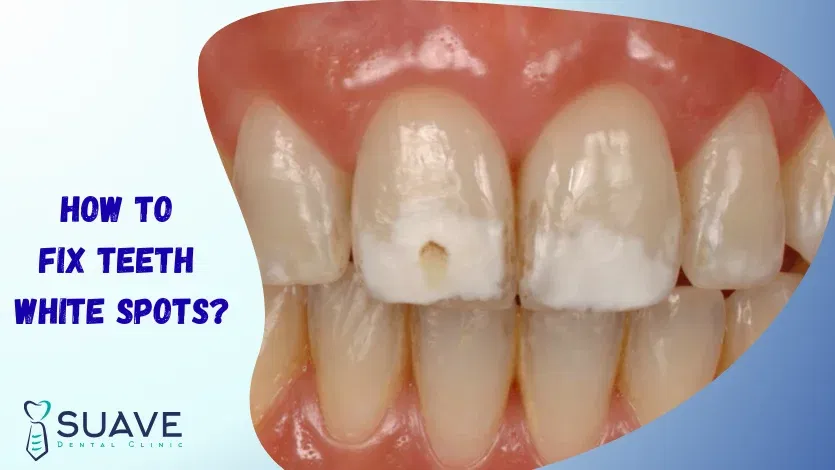
White spot lesions on teeth have the dental term “dental decalcification or dental demineralization,” which basically means losing minerals like phosphate and calcium from the outer tooth layer, “enamel,” resulting in chalky white patches or softened enamel.
It’s like a breakdown in the enamel tooth structure. You may be confused whether this white lesion is a tooth cavity or a stain. The fact is, enamel decalcification is the first sign of a tooth cavity process, and it is considered the reversible phase of dental caries.
Why do I have white spots on my teeth?
There are several causes of white spots on teeth that contribute to enamel decalcification:
- Wearing braces without proper teeth brushing
You may notice white shadows around your braces, which result from mineral loss in the tooth due to improper brushing or cleaning, as well as from consuming sugary and acidic drinks and foods. - Frequent acidic diet
Consuming too much acidic-sugary food like soda, coffee, and lemon juice dissolves away the outer enamel layer. - Acid reflux
When stomach acid comes back up the esophagus and into the mouth, causing heartburn, as in Bulimia, and Gastroesophageal reflux disease. Stomach acids accumulate on tooth structure. It appears on the teeth as white, chalky, or opaque patches, frequently found on the anterior teeth, indicating the initial phase of enamel demineralization. - Early decay phase
Not brushing or flossing your teeth for 24-48 hours can build up a thin layer of bacteria called plaque, which produces acids that affect the outer tooth surface ”enamel,” causing the white spots initially before turning into decay. - Early signs of fluorosis
Fluoride toxicity, or the accumulation of fluoride at high concentrations in the tooth structure during tooth development (first eight years), due to high exposure to fluoride levels in water, for example, can result in the dental term ”Fluorosis”. Which ranges from mild white spots discoloration to severe light brown spots. - Dehydration
White spots on teeth resulting from dehydration are temporary, chalky marks that occur due to a loss of saliva, noticeable in the morning as a consequence of overnight mouth breathing. These spots generally disappear within a few hours as saliva helps to rehydrate the enamel. - Defect in enamel formation
It is called “Enamel Hypoplasia”, its appearance ranges from white spots, brown discoloration, thin, weak enamel that is prone to fracture and decay, and it develops due to several factors that affect the teeth during formation, like Insufficient nutrition, exposure to toxins, illness, such as high fever during childhood, or injury to the developing teeth. - Any Maternal illness or medication before birth can affect the tooth structure formation of this baby, such as antibiotics like (Tetracycline/Doxycycline), or smoking during pregnancy.
Best ways to remove white spots on teeth
White spots on teeth can affect your healthy smile. The good news is you can get your attractive smile back without breaking the bank. There are several treatment plans according to the cause, depth, and severity of the spots.
Here are the most effective methods for how to fix white spots on teeth that Suave Clinic offers:
- Enamel Remineralization is the process of repairing tooth structure by restoring the lost minerals (calcium and phosphates) and reversing the enamel breakdown and the early decay by
- Remineralization agents include fluoride-based options, like: (Sensodyne Pronamel, Colgate Renewal, Clinpro 5000) and hydroxyapatite-based alternatives (Boka, RiseWell).
- Toothpaste designed for remineralization (prescribed rich-in-fluoride toothpastes).
- Professional application of fluoride gel and fluoride varnish.
- Resin Infiltration (Icon Infiltration Treatment)
One of the most advanced and conservative treatments, best for white spots caused by early demineralization (often after braces). A special resin penetrates the porous enamel and blends the color, resulting in Immediate improvement without drilling. - Dental Bonding
Tooth-colored composite bonding resin is used to cover the white spot, effectively concealing it. Ideal for moderate enamel imperfections, lasts several years with appropriate maintenance. - Ceramic Veneers
E-max Veneers are used for individuals with severe, deep, or extensive white spots, discoloration, or enamel deterioration, such as patients suffers from fluorosis or severe enamel hypoplasia.

There are some dental treatments for white spots on teeth that you must be aware of:
🔵 Microabrasion: Enamel microabrasion may be recommended for superficial mild cases by removing a thin outer layer of enamel to diminish surface white spots. Theoretically, the process is fast and minimally invasive, and results in a smoother, more uniform enamel appearance. But clinically, there is a great chance that you can feel tooth pain and sensitivity with hot, cold, and air after this irreversible microabrasion.
🔵 Teeth whitening
In-office bleaching white spots on teeth efficiently diminishes deep dark teeth discolorations and stains, which is why traditional teeth whitening is not applicable in this case; it won’t remove the white spots and can cause them to be more noticeable than before.
You can safely try teeth whitening strips before laser teeth whitening to see if the result is worth it or not.
How to prevent teeth decalcification?
Prevention of future teeth decalcification requires changing daily habits, like
- Less Soda, More Water: Water is a natural source of fluoride. Drinking plenty of water, 8 glasses a day, is a must to keep your body hydrated and have a sufficient amount of minerals.
- Good Oral Hygiene: You need to brush your teeth for two minutes two times every day using fluoride toothpaste.
- You can use a special brush for braces if you have orthodontic treatment to prevent plaque accumulation, white spots, and further decay.
- Daily Flossing: using dental floss or interdental brushes to clean plaque from your teeth every day.
- Fluoride mouthwash, which your dentist prescribes to strengthen your teeth as part of your everyday dental care.
- Children who are younger than 8 years old should have their fluoride intake because their permanent teeth are still developing. For children under 3 years old, parents should use a fluoride toothpaste smear, while children aged 3 to 6 should use a pea-sized amount of toothpaste for supervised brushing. Water fluoridation levels must be monitored, while they should only use fluoride supplements when a doctor prescribes them.
- Less acidic diet; if you have an acidic diet or beverages like soda, coffee, lemon juice, try to neutralize your mouth ph by drinking water after it.
- Professional Dental Hygiene: You should visit your dentist every 4 to 6 months for professional dental cleaning.
- Orthodontic Maintenance: Patients with braces need to use special cleaning devices, which include interdental brushes, to clean their teeth between brackets.
- Dry Mouth Management: You need to see a dentist for dry mouth treatment because this condition reduces your body’s ability to produce saliva. You can prevent that by treating the cause, which is a dental condition like Open Mouth Posture Syndrome (OMPS) or Mouth-Breathing Syndrome (MBS), snoring, or certain medication intake like weight-reducing medication such as Ozempic, Wegovy, Mounjaro, and Zepbound that can cause Ozempic teeth.
At Suave Clinic, we believe that prevention is always better than correction. Our team of professionals is dedicated to early detection, advanced remineralization solutions, and customized teeth care plans to protect your smile at all times.
Get A Free Dental Consultation
Get A Personalized Treatment Plan and Quotation

References
Medically Reviewe