Table of Contents
Do you wake up with a sore jaw, headaches, or severely sensitive teeth? Plenty of people clench or grind their teeth without even realizing it. Bruxism is one of those stress-related habits. It can occur while you are awake or sleeping.
In this article, you will learn more about the symptoms of bruxism and why you grind your teeth at night, providing you with advanced treatments that protect your teeth and offer comfort.
What is Bruxism?
Bruxism is a condition that causes involuntary teeth grinding, gnashing, or clenching during the day or when you are asleep.
Occasional teeth grinding is quite common, particularly during periods of stress. However, when it happens frequently, it can place extra pressure on your teeth and jaw. Over time, this may lead to tooth damage, jaw pain, headaches, and facial discomfort.
Bruxism can affect anyone, but it’s more common in children and teenagers because of their growth and development as they grow older.
Sleep bruxism is one of those sleep disorders that the patient isn’t aware of; that’s why we don’t know how common sleep bruxism is.
Maybe the first one who will notice that you are a sleep bruxer is your dentist or your bed partner.
The difference between teeth clenching and grinding
Tooth grinding and tooth clenching are often mentioned together, but they are distinct conditions. Tooth grinding, also known as bruxism, occurs when an individual is not aware of tooth contact and grinds or rubs teeth together against each other in a side-to-side movement. In most cases, it happens while sleeping, but it also occurs when awake, particularly during stressful situations.
Teeth clenching, on the other hand, is when you close your teeth together and hold them so there’s no movement for prolonged amounts of time, causing stress to be put on the teeth and muscles of the jaw system.
Bruxism frequently happens when you are awake or stressed out, and then there’s a chance to notice it and stop it, as it harms your teeth and your muscles.
The more dangerous type is sleep bruxism. That’s why we care about the reasons why you grind your teeth at night.
Early diagnosis and proper care can protect your smile and prevent long-term problems. Our dental experts are here to assess, guide, and provide personalized solutions.
Symptoms and signs you are a grinder
If you grind your teeth frequently, you may notice symptoms such as:
- Teeth grinding or clenching can be disturbing enough to wake the person sleeping next to you, due to the sound of teeth grinding.
- Headaches or facial pain, often first thing in the morning, due to facial muscle strain.
- Sore jaw and muscles of your face, that aches on any movement.
- Discomfort around the ear that may feel like an earache but isn’t related to the ear itself.
- Difficulty opening or closing your mouth.
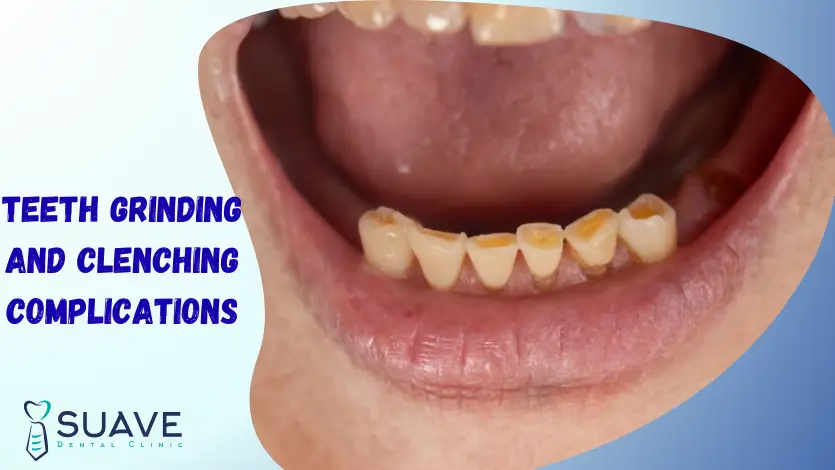
- Teeth showing signs of wear, cracks, chips, or looseness.
- Teeth become flat and small.
- Worn-down enamel, no prominent cusps in molar teeth or incisal edges in front teeth.
- Teeth are more sensitive to hot and cold because of the exposure of the dentin inner tooth layer.
- Tooth pain or increased sensitivity when eating or drinking.
- Teeth hurt suddenly without any initiators
- Worn-out dental filling like composite bonding, chipping, or amalgam filling fractures, and then need to be replaced with more protective tooth restorations.
Why do you grind your teeth at night?
There are risk factors that increase your chances of developing bruxism (teeth grinding or clenching), which include the following:
- Being under stress or anxiety: Feeling stressed, angry, frustrated, or overwhelmed can trigger bruxism. People with anxiety or depression, such as major depressive disorder (MDD), generalized anxiety disorder (GAD), or post-traumatic stress disorder, are more likely to grind their teeth.
- Misaligned teeth or bite problems that put extra pressure on certain teeth.
- Behavioral factors: Having a naturally intense or hyperactive personality can increase the risk of bruxism.
- Daily Habits: Smoking, drinking alcohol, or consuming too much caffeine can increase your chance of bruxism.
- Certain medications: Some drugs may increase the risk, including a group of anti-anxiety drugs called SSRIs, or selective serotonin reuptake inhibitors.
- Different health conditions that can lead to teeth grinding include Parkinson’s, dementia, GERD, epilepsy, night terrors, and ADHD.
- Sleep apnea: Sleep apnea (breath pausing while sleeping) and teeth grinding are related, according to research findings. Many people have both conditions, although it is not yet clear whether one causes the other.
How to control and stop teeth grinding?
Although teeth grinding can result in worn teeth and a strained jaw, there is a way of controlling it to maintain healthy teeth
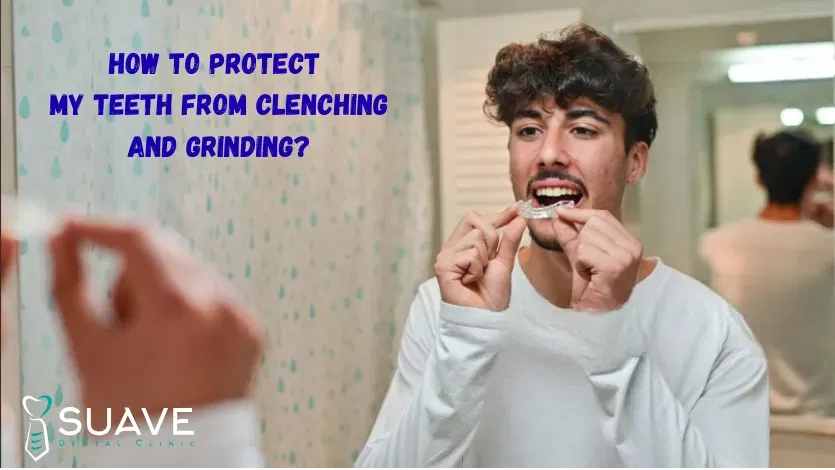
- Use a custom night guard
A dental splint on one jaw is not as effective as using custom night guards on both upper and lower jaws to protect teeth from damage and reduce stress forces on facial muscles. - Manage stress: practices for deep relaxation that also tend to alleviate grinding brought on by stress, and stress reduction techniques like deep breathing, meditation, or mindfulness may reduce grinding triggered by tension.
- Seek psychotherapy if you face stress and pressure that badly affect your behavior, sleep, and normal life.
- Facial exercise and massage: Some people may find that gentle jaw exercises, physical therapy, or massage can relieve muscle strain.
- Consult your dentist: they can suggest different types of treatment options, including medicines, muscle relaxants, or even, in some cases, Botox injections if nightguards are useless.
You can implement a few lifestyle changes at home to assist in preventing or alleviating discomfort in your teeth, jaw, and neck resulting from teeth grinding:
- Avoid hard and sticky foods such as nuts, popcorn, and hard candies.
- Caution with large sandwiches that are challenging to chew, it’s better to slice them into small pieces to avoid excessive mastication forces on your muscles
- Avoid chewing gum, as it may put strain on your jaw.
- Modify your sleeping position or pillow to provide adequate support for your head and neck.
How do dentists repair ground teeth?
Repairing ground teeth depends on how much tooth structure has been worn away and the overall state of your oral health. The dental team at Suave Clinic uses a tailored approach based on each person’s oral health and goals. This may include the following options:
- Root canal treatment if teeth start to hurt badly with hot or cold stimuli, and pulp tissue is exposed as a result of heavy bruxism
- Zirconia crowns are the most suitable restorative option for heavy-biting patients and grinders. Zirconia dental material is strong and tough enough to withstand the high pressure and mastication forces.
These dental crowns can last for 10-15 years in function with maintaining good oral hygiene. - Post and core tooth build-up with a glass-fiber or metal post that supports the remaining tooth structure and rebuilds it after small fractures.
- Inlays and Onlays: If damage is limited to specific areas of a tooth, ceramic onlays or inlays offer a more conservative way to repair and protect the affected portion.
- Dental filling as composite bonding for minor wear: When grinding causes small chips or uneven edges, a tooth-colored resin can reshape and smooth the teeth.
- Dental Veneers for moderate damage: Zirconia veneers placed on the front surface of the front teeth and extended more palatally to restore the worn-out incisal edge. They are effective when teeth have shortened from grinding, but still have a healthy structure.
- Full mouth crowns in severe cases.
- Bite adjustment if teeth malalignment is the cause of bruxism, then adjusting the bite can ease uneven pressure, and a custom night guard helps protect teeth from further damage while you sleep.
All these treatment options are accompanied by night guards, as a tooth restoration is just one part of the solution. Wearing custom night guards while sleeping prevents late-night bruxism and helps keep the restorations intact.
Complications of teeth grinding and clenching If left untreated
Teeth grinding can lead to various problems. Early recognition of these signs and getting the right help can protect your smile and prevent long-term issues, including:
- Sleep problems
- Eating and chewing difficulties
- Severe heavy bruxism for a long time can cause periodontal ligaments and bone loss as a result of excessive forces on the tooth structure and its supporting surrounding tissue. This may be treated with bone graft surgery and gingival reconstruction to support teeth in their sockets.
- If a tooth becomes loose or has cracks or fractures that cannot be restored, then a tooth extraction is a viable option, followed by selecting the best options for replacing the missing teeth.
- Temporomandibular joint (TMJ) disorders, which affect the jaw joints located just in front of your ears, can cause pain or clicking when opening and closing your mouth.
- Facial pain and tension-type headaches.
For most people, bruxism doesn’t lead to serious problems. However, in severe cases, it can cause lasting damage to teeth, dental work, jaw joints, and nearby facial muscles. This can lead to ongoing discomfort and necessitate dental care. Explore your options with confidence. Suave Clinic offers free consultations with our dental experts. A personalized plan begins with understanding your needs.
Get A Free Dental Consultation
Get A Personalized Treatment Plan and Quotation

References
Medically Reviewe